

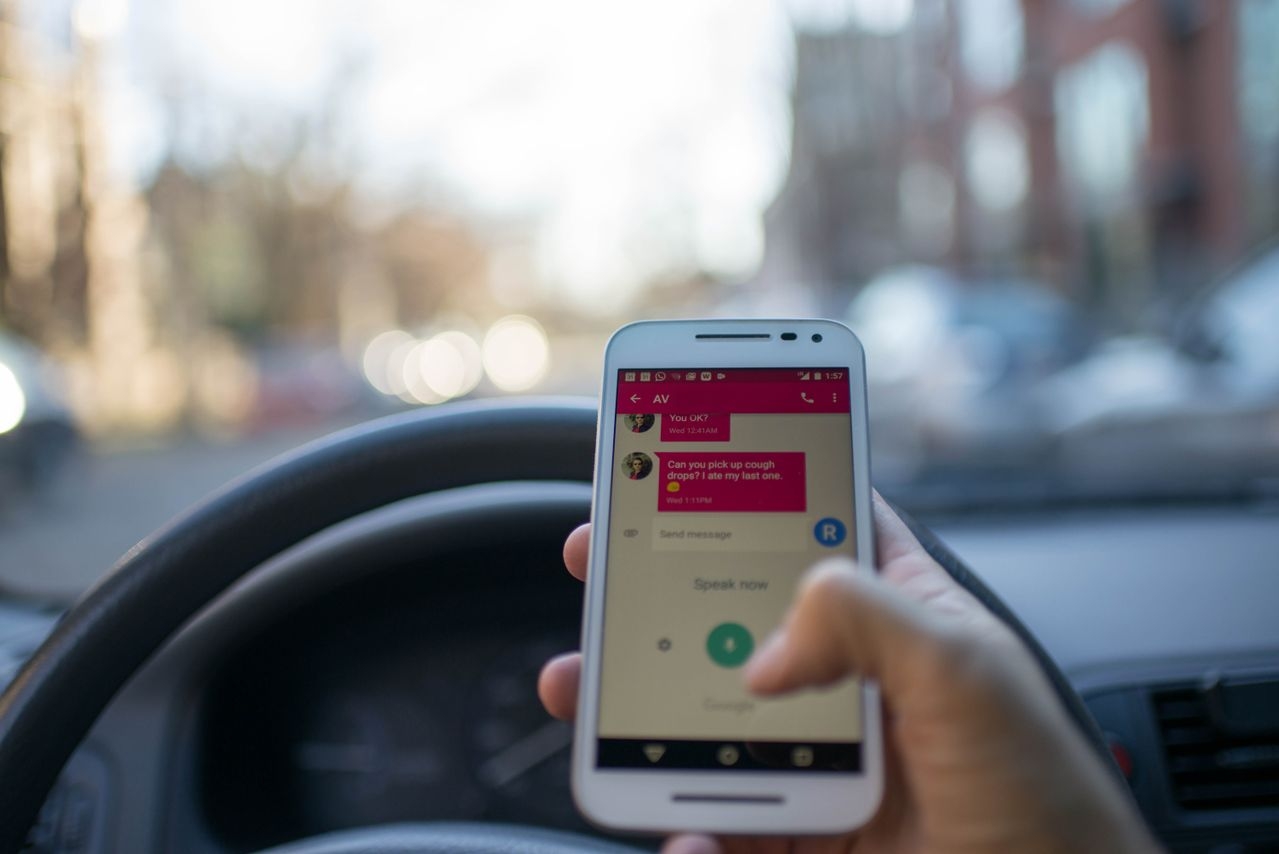
You are waiting at a red light when you pick up your phone to check a message or look at directions. Traffic is not moving, but a few moments later, you see police lights behind you.
Can Pennsylvania's handheld-device law apply even when your vehicle is temporarily stopped?
Yes. For purposes of this law, a driver can still be considered to be driving while waiting at a traffic signal, sitting in congestion, or experiencing another brief traffic delay.
Pennsylvania has moved beyond the law's introductory warning stage, making it especially important for drivers to understand what conduct the current rule covers.
Whether you are driving through Bucks County, Montgomery County, Allentown, the Lehigh Valley, or elsewhere in Pennsylvania, the law applies statewide.
If you received a traffic citation involving your phone, the details matter: where your vehicle was, whether you were still in traffic, and what the officer says you were doing with the device.
What Changed When the Warning Period Ended?
Paul Miller's Law went into effect on June 5, 2025. During the law's first year, violations were subject to written warnings rather than the new monetary penalty.
That introductory period has ended.
An ordinary violation is now a summary offense carrying a statutory fine of $50 upon conviction, in addition to court costs and applicable fees. Section 3316.1 is not listed among the offenses for which Pennsylvania's driver's license point system assigns points.
For drivers who became familiar with the law during its first year, the practical change is straightforward: conduct that previously resulted in a warning can now result in a citation carrying a financial penalty.
What Kind of Phone Use Does the Law Cover?
Pennsylvania's current rule reaches beyond texting.
Under 75 Pa.C.S. § 3316.1, prohibited physical interaction with a mobile device can include holding it or supporting it against the body. The law also addresses using multiple button presses to initiate or answer a call and reaching for the device when doing so requires the driver to leave the normal seated and seat-belted driving position.
The rule applies to smartphones and other portable devices capable of communication or exchanging electronic data.
That means a citation does not necessarily depend on an officer seeing someone type a text message. The issue can instead be whether the officer observed the driver holding, supporting, reaching for, or manually operating the device in a way covered by the statute.
Why Does a Red Light Still Count as Driving?
The law distinguishes between a temporary stop in traffic and actually getting out of the flow of traffic.
A vehicle that is stationary because of a traffic signal, congestion, or another brief traffic delay is still treated as being driven for purposes of the handheld-device restriction. Picking up a phone simply because traffic has stopped, therefore, does not take the situation outside the rule.
Pulling over is different.
The statute treats the situation differently after a driver moves the vehicle to the side of or off the highway and stops in a place where the vehicle can safely stay stopped.
For someone driving in Bensalem, Montgomery County, Allentown, or elsewhere in the region, the practical distinction is simple: waiting for traffic to move is different from getting safely out of traffic before handling the phone.
What Can You Still Do Without Holding Your Phone?
Paul Miller's Law does not prohibit every phone-related function inside a vehicle.
PennDOT identifies calling, navigation, and audio as functions that drivers can use through hands-free technology. A driver can therefore use features such as navigation or participate in a hands-free call without physically operating the device in a prohibited manner.
The statute also permits otherwise restricted device use when necessary to communicate with law enforcement or other emergency services to help prevent injury to a person or property.
For an ordinary task that requires you to handle the device directly, move out of traffic and come to a safe stop before doing so.
Can Phone Use Alone Be the Reason for a Traffic Stop?
Yes. Pennsylvania treats prohibited handheld-device use as a primary traffic offense under Pennsylvania's distracted driving law.
That means an officer does not first have to observe speeding or another separate traffic violation before initiating a stop based on suspected prohibited phone use.
That explains why suspected prohibited phone use can lead to a traffic stop. It does not, by itself, establish that the driver violated the law. Whether a violation occurred depends on the facts and what the evidence shows about the driver's use of the device.
What Matters After You Receive a Phone-Use Citation?
Once a citation has been issued, the general rules are only part of the picture. The circumstances of the individual stop also matter.
At Applebaum Joachim Law Group, when we evaluate a traffic citation, we look beyond the name of the offense. For a handheld-device citation, that can include considering where the vehicle was located, whether it was moving or temporarily stopped in traffic, what the officer says was observed, and what the driver was actually doing with the device.
Those facts do not automatically determine the outcome of a citation. They can help clarify whether what the officer says occurred matches the type of device use prohibited by the statute.
If the same stop resulted in additional citations or criminal allegations, those matters should also be considered on their own facts.
What Should You Consider Before Paying a Phone-Use Ticket?
A traffic citation comes with response instructions and deadlines, and those deadlines should not be ignored.
Before deciding how to proceed, make sure you understand both what you are accused of and what payment means. If you pay an undisposed Pennsylvania traffic citation through the PAePay system, the payment constitutes a waiver of a court hearing and the entry of a guilty plea.
If you intend to contest the citation instead, follow the instructions and deadlines provided with it.
That does not mean every phone-use citation should be challenged. The appropriate response depends on the facts of the stop, the citation issued, and whether any other violations were charged at the same time.
Keep your copy of the citation. If you have information that could help establish where you were, what was happening when the stop occurred, or how the device was being used, preserve it rather than relying on your memory later.
What Do Pennsylvania's Recent Enforcement Numbers Show?
Pennsylvania State Police began issuing citations after the warning period ended, and recent enforcement data shows that the law is being actively used.
During a three-day statewide enforcement initiative from June 8 through June 10, 2026, State Police reported 694 citations related to Paul Miller's Law. PSP had issued 1,616 warnings during the preceding one-year warning period.
Those figures do not tell us what will happen in any individual traffic stop. They do show that drivers should no longer assume a suspected violation will result only in a warning.
For someone who has already received a citation, the relevant question is no longer whether Pennsylvania is enforcing the law. It is what happened during that particular stop and how to respond to the citation that was issued.
Pulled Over for Phone Use in Pennsylvania? Understand What Comes Next
A traffic stop involving a phone can begin with something as brief as handling the device while waiting for traffic to move.
If you received a citation, the next step is deciding how to respond based on the citation, the circumstances of the stop, and any other charges that arose from the same encounter.
At Applebaum Joachim Law Group, we help people understand traffic and criminal matters with straightforward guidance grounded in the facts of their situation. From our Bensalem and Allentown offices, we serve clients throughout Bucks County, Montgomery County, Lehigh County, Northampton County, and surrounding communities.
If you have questions about a Pennsylvania traffic citation or a stop that led to additional charges, contact us to discuss what happened and learn about the options available in your situation.
Disclaimer: Results may vary depending on your particular facts and legal circumstances. The articles on this blog are for informational purposes only and are no substitute for legal advice or an attorney-client relationship. If you are seeking legal advice, please contact our law firm directly.